Choosing packaging for pet food isn’t just about slapping a logo on a bag and calling it a day. For pet parents, every kibble or treat represents love, care, and a commitment to their furry family member’s health. The right flexible packaging doesn’t just protect food—it preserves freshness, reduces waste, and even tells a story about your brand’s values. But with so many options out there, how do you pick the purr-fect solution?
1. Material Safety
Picture this: A concerned pet parent squints at your packaging, wondering, “Is this bag leaching chemicals into Fluffy’s dinner?” Trust is everything in the pet food industry, and material safety is non-negotiable.
What to prioritize:
- BPA-free and food-grade films: Avoid materials like PVC that may contain harmful plasticizers. Opt for FDA-compliant laminates or mono-material films (e.g., PE or PP) designed for direct food contact.
- Barrier properties: High-quality packaging should block oxygen, moisture, and UV light to prevent nutrient degradation. For example, aluminum oxide coatings or EVOH layers can extend shelf life without compromising safety.
- Ink and adhesive safety: Use water-based or soy-based inks—no one wants toxic solvents near their golden retriever’s dinner.
Pro tip: Transparent “window” panels are popular, but ensure the film used is odorless and won’t interact with fats or oils in the food.
2. Shelf Life & Freshness
Ever opened a bag of pet food only to be hit with a rancid smell? Yikes. Pets might not complain, but their humans will notice—and they’ll switch brands faster than you can say “treat.”
Key factors for freshness:
- Multi-layer barrier films: A 3- to 7-layer structure (e.g., PET/AL/PE) combats oxygen ingress, which causes oxidation and spoilage.
- Resealable features: Zippers, sliders, or tear-notches that actually work. Frustration-free reclosing keeps food fresh and customers loyal.
- Nitrogen flushing: Replacing oxygen with nitrogen during packaging can boost shelf life by up to 50%.
Real-world example: A premium cat food brand reduced returns by 30% after switching to high-barrier pouches with argon flushing. Their secret? Partnering with a supplier who understood the science of pet food preservation.
3. Convenience & Functionality
If a package is hard to open, store, or pour, even the healthiest organic salmon kibble will collect dust on shelves. Convenience is king in today’s fast-paced world.
Must-have features:
- Easy-open tabs: No more wrestling with scissors while your German Shepherd drools impatiently.
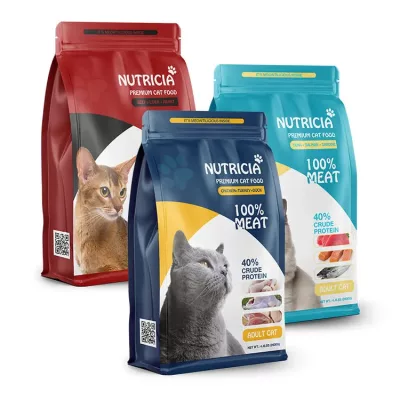
- Ergonomic shapes: Flat-bottom stand-up pouches save pantry space and prevent tipping.
- Lightweight design: Flexible packaging weighs up to 80% less than rigid containers, reducing shipping costs (and your carbon footprint).
Emotional hook: Imagine a tired dog owner at 6 a.m., effortlessly pouring food into a bowl with one hand while holding a coffee in the other. That’s the kind of user-friendly design that builds brand loyalty.
4. Sustainability
Millennial and Gen Z pet parents don’t just want eco-friendly packaging—they demand it. In fact, 68% of buyers say they’d pay more for pet products in sustainable packaging.
How to go green without greenwashing:
- Recyclable mono-materials: Ditch complex multi-layer laminates for PP or PE structures that are curbside-recyclable.
- Compostable options: PLA-based films or cellulose barriers work for brands targeting zero-waste households.
- Post-consumer recycled (PCR) content: Incorporate 20–30% PCR materials to appeal to eco-conscious shoppers.
Caution: Avoid vague terms like “eco-friendly.” Instead, specify certifications (e.g., “certified compostable by TUV Austria”) to build credibility.
5. Brand Storytelling
Here’s the kicker: Your packaging isn’t just a container—it’s a billboard, a trust signal, and a love letter to pet parents. Design matters, but so does emotional resonance.
Ways to connect:
- Transparency: Window panels showing the kibble’s texture/color reassure buyers about quality.
- Whimsical textures: Embossed paw prints or matte finishes create tactile appeal.
- Clear messaging: Use phrases like “vet-approved” or “crafted in small batches” to highlight your USP.
Case study: A boutique dog treat brand saw a 45% sales spike after adding a tear-off “Share the Love” coupon on their pouches, encouraging customers to gift samples to fellow dog owners. Genius, right?
Final Thoughts
Choosing flexible packaging for pet food isn’t just a logistical decision; it’s a reflection of your brand’s commitment to pets, people, and the planet. By prioritizing safety, freshness, convenience, sustainability, and storytelling, you’ll create packaging that does more than hold food—it builds relationships.